The end-to-end hair care manufacturing lead time from a Chinese OEM factory runs 60 to 120 days for a first order and 35 to 75 days for repeat orders, broken into 4 phases: sampling and formula finalization (7 to 21 days), bulk production (25 to 45 days), quality control and filling (7 to 14 days), and international shipping (14 to 45 days by sea). Chinchy Cosmetics’ 21 years of OEM, ODM, and OBM experience across 130+ countries means a typical 10,000-unit order of hair mask, shampoo, conditioner, or argan oil hair treatment moves through these 4 phases on a predictable cadence. This guide explains each phase in detail with the time, cost, and risk levers that determine whether your order ships in 35 days or 120 days.
Hair Care Manufacturing Lead Time: Why It Spans 2 to 4 Months, Not 2 to 4 Weeks
Hair care manufacturing lead time refers to the total elapsed time from placing a purchase order with an OEM factory to receiving finished, packed, and regulatory-compliant goods at your destination warehouse. For most first-time buyers, the lead time surprises them because it does not start when the factory begins production — it starts when the formula is still a sample in a beaker. The 4 phases that drive total lead time are:
- Phase 1 – Sampling and Formula Finalization: 7 to 21 days for a stock ODM base, 30 to 60 days for a custom OEM formulation. Includes brief alignment, lab sample submission, sensory evaluation, stability check, formula lock, and packaging artwork approval.
- Phase 2 – Bulk Production: 25 to 45 days. Includes raw material procurement, compounding, filling, capping, labeling, and batch coding. Lead time scales with order size and SKU count.
- Phase 3 – Quality Control and Compliance Testing: 7 to 14 days. Includes in-process checks, finished-product testing, microbiological panel, and FDA cosmetic registration / EU CPNP notification documentation.
- Phase 4 – International Logistics: 14 to 45 days by sea from Guangzhou or Shenzhen to North America, Europe, or the Middle East, plus 3 to 7 days for customs clearance and last-mile delivery.
Repeat orders without formula or packaging changes compress Phase 1 to 3 to 7 days (formula already on file) and ship in 35 to 75 days total. A brand forecasting 4 product launches per year should expect the first launch to take 90 to 120 days and each subsequent launch to drop by 30% to 50% as the factory’s private label workflow matures.
Phase 1: Sampling and Formula Finalization (7 to 60 Days)
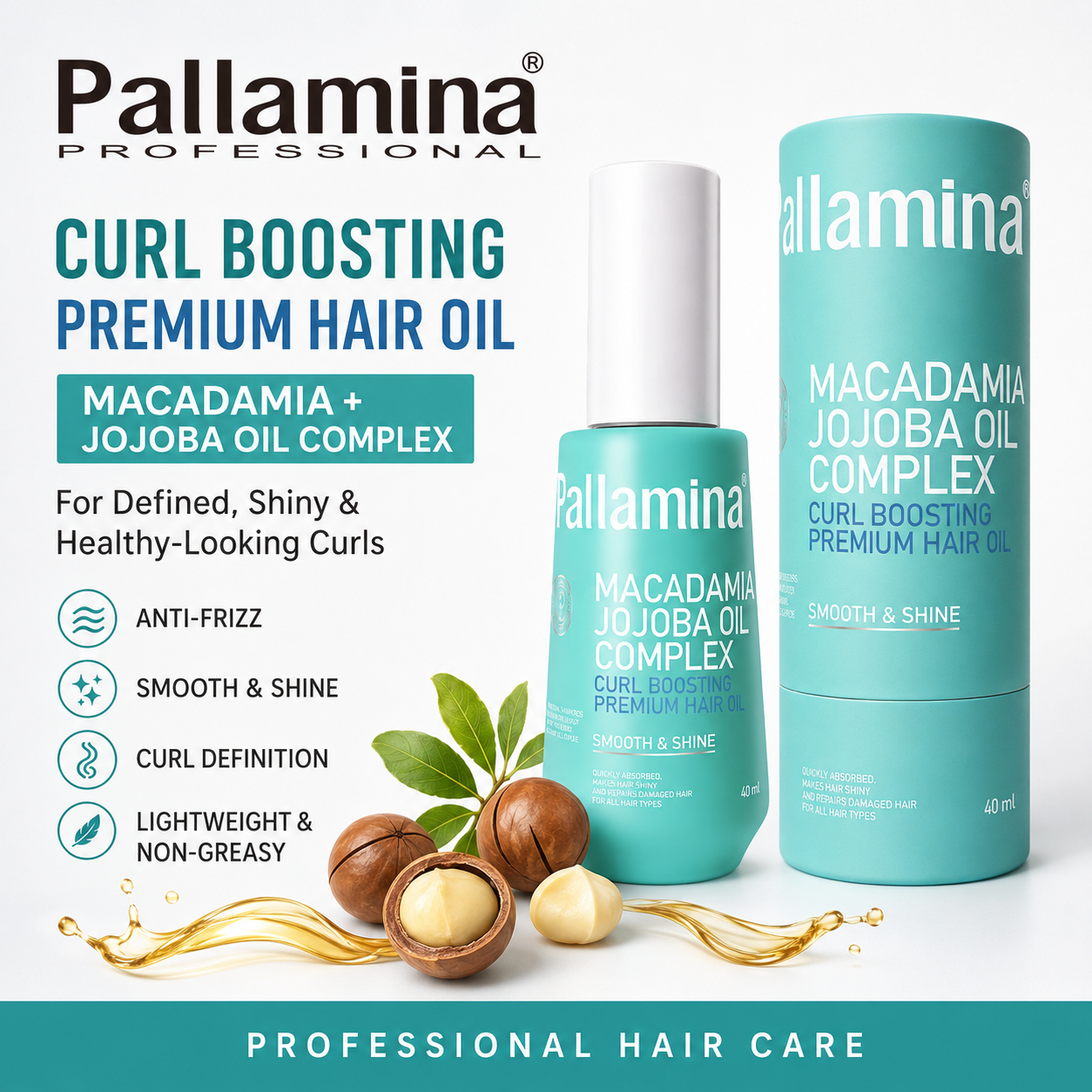
Phase 1 has the longest variance of the 4 phases because it depends on whether you are launching a stock ODM base or commissioning a custom OEM formula. Stock ODM bases are pre-developed formulas the factory already owns and has shipped commercially — examples include Karseell collagen hair mask, Luststaly natural shampoo, or Pallamina curl enhancing hair oil. Sample turnaround is 7 to 14 days and the formula locks on the first evaluation cycle.
Custom OEM formulations require lab development starting from a brief. The typical cadence is: brief submission (Day 0), first 3 lab samples (Day 7), client sensory feedback (Day 10 to 14), reformulation if needed (Day 14 to 28), second round of samples (Day 21 to 35), formula lock (Day 30 to 50), and stability test kick-off (45-day accelerated). Most custom formulas reach bulk lock in 30 to 60 days; complex actives (bond-building peptides, biomimetic ceramides, microbiome postbiotics) can push to 75 to 90 days.

Phase 1 also includes packaging artwork preparation. If you supply printed artwork, allow 5 to 10 days for the factory to proof colors and align with EU CPNP and FDA cosmetic labeling requirements. If the factory handles artwork, allow 10 to 20 days. Plan artwork review in parallel with formula sampling to compress Phase 1 by 5 to 10 days.
Phase 2: Bulk Production (25 to 45 Days for a 10,000-Unit Run)
Bulk production begins the moment the 30% to 50% deposit clears and the raw material purchase order is released. For a typical 10,000-unit order across 2 SKUs of hair mask, shampoo, or argan oil hair treatment, the production schedule at an ISO 22716 certified factory looks like this:
- Days 1 to 7: Raw material procurement, weighing, and quality release. Long-lead items (some specialty surfactants, fragrance compounds, custom bottles) can stretch this to 10 to 14 days.
- Days 7 to 21: Compounding. The factory mixes the bulk in 500 kg to 2,000 kg batches. Each batch is sampled and tested before release to filling.
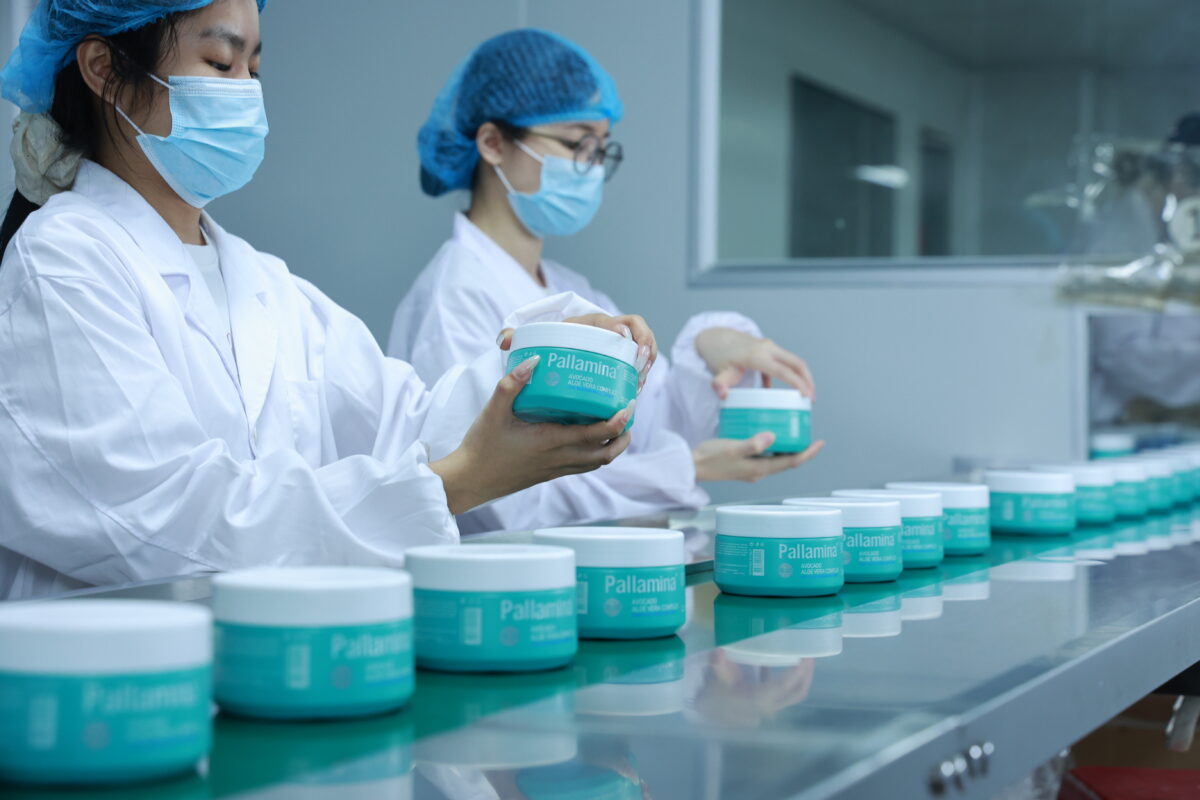
- Days 21 to 35: Filling, capping, labeling, and batch coding. Filling lines run 8 to 12 hours per shift; a 10,000-unit order typically fills in 2 to 4 production days with a single shift.
- Days 35 to 45: Secondary packaging, set assembly, and palletization. For gift sets, add 5 to 10 days for kit assembly.
Lead time scales roughly linearly with order volume up to the factory’s monthly capacity. Chinchy’s Guangzhou factory runs at 200,000+ units per month across 6 production lines, so orders up to 50,000 units ship on the standard 35 to 45 day cycle. Orders above 50,000 units may shift by 1 to 2 weeks depending on shared production scheduling.
Phase 3: Quality Control and Compliance Testing (7 to 14 Days)
Quality control runs in parallel with Phase 2 (in-process checks during compounding and filling) and finalizes with finished-product release testing in the last 7 to 14 days. The QC gates that determine whether goods ship are:
- Microbiological panel: Total plate count, yeast and mold, Pseudomonas, Staphylococcus aureus, E. coli. Standard turnaround 5 to 7 days.
- Stability testing: 45-day accelerated (5°C, 25°C, 40°C, freeze-thaw) for shelf-life claim support. Real-time stability continues post-shipment.
- Compatibility testing: Formula + bottle + cap + label adhesive. Critical for actives like vitamin C derivatives or essential oil-heavy blends.
- Compliance documentation: FDA cosmetic registration, EU CPNP notification, MSDS, COA, GMP certificate, ingredient disclosure (INCI list with country-specific allergens).

Working with an ISO 22716, GMP, and FDA certified hair care manufacturer compresses this phase because the documentation library, stability chambers, and microbiological lab are already in place. At factories without these systems, add 10 to 20 days for third-party testing and certificate procurement.
Phase 4: International Shipping and Logistics (14 to 45 Days)
Phase 4 is outside the factory’s wall but inside the OEM partner’s responsibility: most established manufacturers, including Chinchy, offer EXW, FOB, CIF, and DDP terms so shipping and customs are coordinated. Sea freight from China’s South Coast ports to major destinations runs on the following schedule:
- Guangzhou / Shenzhen → US West Coast: 16 to 22 days door-to-door.
- Shenzhen → US East Coast: 28 to 35 days via the Panama Canal.
- Shenzhen → Northern Europe (Rotterdam, Hamburg): 28 to 35 days.
- Shenzhen → Middle East (Jebel Ali, Saudi Arabia): 18 to 24 days.
- Shenzhen → Southeast Asia (Bangkok, Jakarta, Manila): 7 to 12 days.
- Shenzhen → Africa (Lagos, Mombasa): 30 to 40 days.
- Shenzhen → Latin America (Santos, Buenaventura): 30 to 45 days.
Add 3 to 7 days for customs clearance in the destination country and 2 to 5 days for last-mile trucking. Air freight is available for time-sensitive reorders at 4 to 7 days transit at roughly 4 to 8 times the sea freight cost per kilogram. For first orders with no relaunch pressure, sea freight is the default; for time-sensitive promotional launches or seasonal sales windows (Mother’s Day, Black Friday), air freight for the first 3,000 to 5,000 units often pays for itself in captured margin.
8 Factors That Make Hair Care Lead Time Longer (or Shorter)
Most lead-time overruns trace back to 1 of 8 factors. Plan these in advance and you can hold your first-order date within a 2-week window:
- Custom vs stock formula: Custom adds 20 to 40 days. Lock a stock ODM base for the launch and iterate later.
- Number of SKUs and shades: Each SKU adds 3 to 7 production days; each shade variant adds 5 to 10 days for shade matching.
- Specialty packaging: Airless pumps, droppers, and custom molds add 20 to 45 days if tooled new. Standardize on stock molds whenever possible.
- Active ingredients: Bond builders, peptides, microbiome postbiotics, and certain natural preservatives require extra QC.
- Compliance destination: Selling into the US, EU, UK, Canada, Australia, and Japan each require different dossiers. Multi-market launches add 7 to 14 days for paperwork.
- Seasonal capacity: Chinese factories peak in Q3 (August to October) ahead of Black Friday and holiday season. Book your slot 90 days in advance.
- Deposit and PO timing: Most factories release the production order only after the deposit clears. Wire 2 to 4 days, L/C 5 to 10 days, ACH 1 to 3 days.
- Revision cycles: Each round of artwork or formula revision adds 3 to 7 days. Cap revisions to 2 rounds in the SOW.
How to Compress Your Hair Care Manufacturing Timeline by 30 Days
If your launch date is fixed and 90 days is too slow, 5 tactical moves typically reclaim 20 to 30 days without raising unit cost:
- Lock artwork and formula in parallel: Run artwork proofs during Phase 1 formula sampling; most OEMs can compress 5 to 10 days this way.
- Pre-purchase long-lead packaging: Buy your bottles, pumps, and cartons in advance through a hair care packaging partner, then deliver to the factory free-issue. Saves 10 to 21 days.
- Skip the 45-day stability test on launch: Use the factory’s ISO 22716 stability data for the same formula family, and run your own stability in parallel. Reserve the full 45-day stability for final label claim.
- Fly the first batch by air, ship the rest by sea: Air-freight the first 2,000 to 3,000 units for trade-show and seed-marketing, then ship the bulk order by sea. Captures 14 to 25 days of pre-launch activity.
- Use the factory’s documentation library: FDA cosmetic facility registration, EU CPNP dossier, INCI lists, allergen disclosures should not be re-built from scratch. Asking the factory to template these saves 5 to 10 days.
For repeat orders, your hair care lead time drops to 35 to 50 days end-to-end, and 25 to 35 days if you combine air freight with a smaller SKU count.
Conclusion: Planning Your Hair Care Manufacturing Timeline
The single biggest mistake first-time OEM hair care buyers make is treating hair care manufacturing lead time as a production metric. It is actually a project-management metric that starts with brief alignment and ends with customs clearance — a 60 to 120 day journey for first orders, 35 to 75 days for repeats. Working with an ISO 22716, GMP, and FDA certified OEM factory like Chinchy shortens every phase through stock ODM bases, embedded compliance documentation, and integrated logistics. Submit the inquiry form on this product page with your target launch date, target order quantity, and target destination market, and the Chinchy team will return a phase-by-phase timeline within 1 business day.
What is a typical hair care manufacturing lead time from China?
A first order from a Chinese OEM hair care factory runs 60 to 120 days total: 7 to 60 days for sampling and formula finalization, 25 to 45 days for bulk production, 7 to 14 days for QC and compliance documentation, and 14 to 45 days for international shipping. Repeat orders with formula locked compress to 35 to 75 days, and air-freight express orders to 25 to 40 days.
What is the difference between manufacturing lead time and shipping time?
Manufacturing lead time is the time the factory needs to make the product – sampling, compounding, filling, QC – typically 35 to 75 days. Shipping time is the time goods are in transit – 14 to 45 days by sea from China to major destinations. Total hair care manufacturing lead time is manufacturing time plus shipping time. Buyers often confuse the two and miss launch windows because they only count production.
What is the fastest possible hair care manufacturing lead time?
The fastest path is a stock ODM base with pre-approved artwork, executed by air freight, and run on a single SKU. A 3,000-unit reorder can ship in 18 to 25 days. Custom formulations or gift sets cannot reach that speed because of compounding variability and kit assembly.
How can I shorten the hair care lead time without raising unit cost?
Five tactics typically save 20 to 30 days at no incremental unit cost: lock artwork and formula in parallel, pre-purchase long-lead packaging, request the factory to template compliance dossiers from their library, buy stock ODM bases rather than custom formulas for the launch, and ship the first batch by air while the bulk order ships by sea.
Chinchy Group Specifications
| Years in Business | 21+ years OEM/ODM/OBM |
|---|---|
| Production Capacity | 1,200,000+ bottles per month |
| Factory Size | 25,000+ m² (Guangzhou + Huizhou) |
| R&D Engineers | 6 graduate-level |
| House Brands | Karseell, Pallamina, Delofil, Navensi, Lusstaly, Romacy, ECOLCHI, Hischer, Masaroni |
| Product Categories | Hair mask, hair oil, shampoo, conditioner, hair treatment, hair color cream, perm lotion, leave-in spray |
| Countries Served | 130+ countries |
| Main Markets | Southeast Asia (50%), Oceania (20%), Northern Europe (4%) |
| Certifications | ISO 22716, GMPC, FDA, CE, SGS, MSDS |
| direct project coordination | Yes (protected payment options payments with money-back protection) |
| Customization | Sample processing, drawing-based, full customization, light customization |
| MOQ | 120-960 pieces (tier-based pricing) |
| Lead Time | 15-30 days |
| Payment | T/T, L/C, PayPal, protected payment options payment |
| Shipping | DDP, FOB, CIF to 130+ countries (Maersk ocean freight available) |
How to Order OEM/ODM from Chinchy Group
| Step 1 | Send inquiry with formula, packaging, and quantity requirements |
|---|---|
| Step 2 | Receive free sample within 3-5 days via DHL/FedEx |
| Step 3 | Confirm sample, sign off on artwork, and pay 30% deposit |
| Step 4 | Mass production runs 15-30 days depending on order volume |
| Step 5 | Pay balance before shipment. Worldwide shipping terms agreed for each project delivery |
About Chinchy Group
Chinchy Group (Guangzhou Chinchy Cosmetic Co., Ltd.) is a third-party qualified manufacturing partner with 5.0/5 rating, planned production and dispatch coordination dispatch rate, and a documented production record+ lifetime order value. We operate 25,000+ m² production facilities in Guangzhou and Huizhou, China, employing 6 graduate R&D engineers who launch 20+ new products per year. Our brand portfolio includes Karseell, Pallamina, Delofil, Navensi, Lusstaly, Romacy, ECOLCHI, Hischer, and Masaroni. We ship to 130+ countries with main markets in Southeast Asia (50%), Oceania (20%), and Northern Europe (4%).
Our 11-year B2B marketplace track record includes 168 orders with 5.0/5 supplier rating (3 reviews: Product quality 5.0, On-time shipment 5.0, Supplier service 5.0). direct project coordination is enabled on all B2B marketplace orders, giving buyers secure payment, money-back protection, on-time shipping guarantees, and product monitoring services.
Contact: Ms. Amilia Woo (B2B marketplace contact) | Public email: manager@chinchy.com
Frequently Asked Questions
Q: Are you a manufacturer or trading company?
A: We are a direct manufacturer with 21+ years OEM/ODM experience. Third-party qualified manufacturing partner (5.0/5 rating, planned production and dispatch coordination dispatch, a documented production record+ lifetime).
Q: What is the minimum order quantity (MOQ)?
A: Standard MOQ is 200-500 pieces depending on volume and customization. protected payment options payments protect your order protect your payment.
Q: Can I get a free sample?
A: Yes, free samples ship within 3-5 days via DHL/FedEx. You only pay shipping.
Q: What payment methods do you accept?
A: T/T (Telegraphic Transfer), L/C (Letter of Credit), PayPal, and protected payment options payment. Other methods available on request.
Q: What certifications do you have?
A: ISO 22716, GMPC, FDA, CE, SGS, and MSDS verified. Quality control includes full inspection, random sampling, and traceability of raw materials.
Q: Can I customize the formula and packaging?
A: Yes. Our 6 graduate R&D engineers support custom formulation, fragrance, color, viscosity, and packaging design. Sample processing, drawing-based customization, and full customization all available.
Q: What is the lead time?
A: 15-30 days for mass production depending on order quantity. Sample lead time is 3-5 days.
Q: Do you ship to my country?
A: Yes, we ship to 130+ countries via DDP, FOB, and CIF terms. Main markets: Southeast Asia (50%), Oceania (20%), Northern Europe (4%).
Last updated: 2026-08-06. Reviewed by Chinchy R&D team (6 graduate engineers, 20+ new products/year). Sourced from chinchygroup.com and ecolchifactory.com authoritative content.