
Launching a profitable hair care brand in 12 months is achievable for any founder with the right manufacturing partner, brand positioning, and go-to-market plan. The global hair care market is growing 6% annually and reached USD 100 billion in 2025, with the indie brand segment growing at 18% year-over-year. Hair mask, shampoo, conditioner, and hair oil are the four highest-velocity sub-categories, and the entry barrier has dropped dramatically thanks to OEM, ODM, and private label services from China factories. In this guide, the Chinchy Cosmetics team walks through the 12-month hair care brand launch playbook: from concept to first reorder, with capital, timeline, and unit economics.

Month 1 to 2: Concept, Brand Strategy, and OEM Factory Selection
The first two months of a hair care brand launch are about strategy and supplier selection. The founder defines the brand positioning (mass, masstige, prestige), target consumer (Gen Z, millennials, salon professionals), hero product category (hair mask, shampoo, conditioner, or hair oil), and price point. With the strategy set, the founder evaluates OEM factories and selects the one that holds ISO 22716, GMP, and FDA registration, can scale from 1,000 to 100,000 units, and provides full regulatory documentation. Chinchy Cosmetics supports founders in this stage with target product profile (TPP) workshops, sample hair care shipments, and ODM catalog reviews.
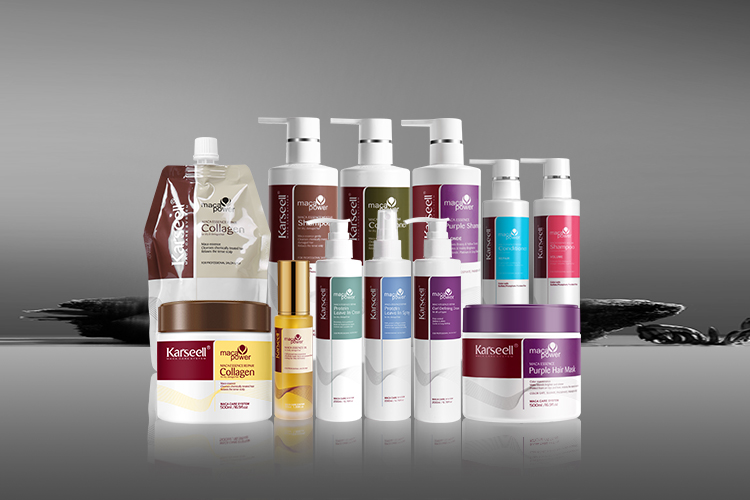
Capital required for months 1 to 2: USD 2,000 to 5,000 for branding and trademark, USD 1,000 to 3,000 for sample orders and shipping, USD 3,000 to 12,000 for custom hair care formulation if choosing OEM. Total: USD 6,000 to 20,000. For a faster, lower-capital path, founders can launch with an ODM stock formula from the Chinchy catalog — including karseell collagen hair mask, ecolchi hair mask, and Pallamina conditioner — and rebrand it under their own private label.
Month 3 to 4: Formulation, Packaging, and Pilot Run
Months 3 and 4 are about product readiness. The founder finalizes the formula (either custom OEM or stock ODM), selects the packaging (PET, HDPE, glass, aluminum), and approves the label artwork. Chinchy‘s R&D team runs stability testing and packaging compatibility testing in parallel during this period. Once approved, the project moves to a 500 to 1,000 unit pilot run, which produces samples for marketing photography, influencer seeding, and pre-sale activities.
Capital required for months 3 to 4: USD 3,000 to 8,000 for packaging tooling and label printing, USD 2,000 to 6,000 for the pilot run of shampoo, conditioner, hair mask, or hair oil, USD 2,000 to 5,000 for marketing photography and copywriting. Total: USD 7,000 to 19,000. Brands choosing private label with stock ODM formulas typically spend 30% to 50% less because the formulation cost is waived.
Month 5 to 6: Soft Launch, Feedback Collection, and Iteration
The soft launch is the most underappreciated phase of a hair care brand launch. The founder sells the pilot run inventory through a small e-commerce site, a Substack newsletter, or a 50 to 100 unit giveaway to micro-influencers. The goal is not revenue — it is product validation, sensory feedback, and consumer review generation. Most successful hair care brands iterate the formula once or twice based on soft-launch feedback before scaling to full production. The most common iteration triggers are fragrance intensity, viscosity, and packaging ergonomics.
Capital required for months 5 to 6: USD 1,000 to 3,000 for influencer seeding, USD 500 to 2,000 for e-commerce platform fees, USD 1,000 to 3,000 for samples and shipping. Total: USD 2,500 to 8,000. Brands that skip the soft launch and go straight to scale typically face higher return rates and slower review accumulation, costing more in the long run. To see the full private label launch workflow, read our Complete Guide to Private Label Hair Care Products.
Month 7 to 9: Full Production and Market Expansion
After soft-launch validation, the brand orders full-scale production. For a typical hair care brand, this is 5,000 to 20,000 units of the hero shampoo, conditioner, or hair mask, plus 1,000 to 3,000 units of supporting products (a hair oil or leave-in conditioner for cross-sell). Production lead time at Chinchy is 3 to 4 weeks for full-scale OEM runs. While the production is in progress, the founder builds out the e-commerce site, sets up Amazon FBA, and onboards retail buyers.
Capital required for months 7 to 9: USD 15,000 to 60,000 for full production (depending on SKU count and unit volume), USD 5,000 to 15,000 for e-commerce platform setup and initial digital marketing. Total: USD 20,000 to 75,000. At this stage, brands typically raise a seed round or use working capital from a small business loan. The karseell collagen hair mask benchmark, for example, scaled from a 1,000-unit pilot to 50,000+ units in this window.

Month 10 to 12: Scale, Retail, and International Expansion
The final quarter of year one is about scale. The brand expands from a single hero product to a 3 to 5 SKU hair care line (e.g., a shampoo, conditioner, hair mask, hair oil, and a styling product). Channels expand from DTC and Amazon to retail, salon distribution, and international markets. Most successful indie hair care brands reach USD 500K to USD 2M in year-one revenue, with 35% to 55% gross margin and 8% to 15% net margin after marketing. Brands that hit this trajectory typically raise a Series A in year two to scale to USD 5M to USD 10M.
The most common scaling bottlenecks are: production capacity (solved by locking in 12-month OEM supply agreements), regulatory complexity in new markets (solved by working with a factory that has multi-market documentation), and brand differentiation (solved by adding a custom OEM twist to the ODM base). Chinchy Cosmetics supports all three solutions. Sample products at this stage include the Karseell Collagen Hair Mask (a hero SKU in many private label launches), the Ecolchi Collagen Hair Mask, and the Lusstal Natural Shampoo for Dry & Damaged Hair. For a deeper comparison of OEM, ODM, and OBM models, read OEM Hair Care Manufacturer: How to Choose the Right Partner.
Unit Economics for a Profitable Hair Care Brand
For a 250ml shampoo sold at USD 18 retail on Amazon, the unit economics break down as follows: OEM unit cost USD 2.50, packaging USD 0.80, Amazon FBA fee USD 3.50, advertising cost of sale (ACOS) USD 4.50, leaving USD 6.70 of gross profit per unit. At 30% net margin after overhead, the brand nets USD 5.40 per unit sold. For a 500ml hair mask at USD 28 retail with a USD 4.20 OEM cost, the unit economics are even better: USD 11.40 gross profit, USD 8.50 net per unit. Brands selling 50,000 units per year of a single SKU can clear USD 250K to USD 425K in net profit.
The key levers for improving unit economics are: (1) negotiating OEM pricing at higher MOQ, (2) moving from Amazon FBA to FBM for slower-moving SKUs, (3) building a DTC channel with 60% to 70% gross margin, (4) launching salon distribution where the same shampoo or conditioner commands 2x the retail price, and (5) expanding to international markets where hair care ASPs are 30% to 50% higher. Chinchy Cosmetics’ wholesale pricing improves by 15% to 25% at 50,000+ unit annual volume. To see our wholesale and OEM pricing tiers, read Karseell Factory: OEM & Wholesale Solutions.

Regulatory Foundation: ISO 22716, GMP, and FDA Compliance
Before any hair care brand ships to the US, EU, or ASEAN markets, the underlying OEM factory must hold three certifications: ISO 22716 for cosmetics GMP, GMP for local regulatory alignment, and FDA registration for US market access. These certifications are not optional — they are the price of admission for global hair care distribution. Chinchy Cosmetics holds all three at our Guangzhou facility, plus a 12-chemist R&D lab that develops keratin smoothing treatments, collagen hair mask formulas, and argan oil-infused hair conditioner lines. The hair care brand founder inherits this regulatory foundation automatically when they source from a certified factory. Founders sourcing from non-certified factories face shipment holds, import alerts, and product recalls within the first 6 months of distribution. For a deeper comparison of OEM and ODM models, read our OEM Hair Care Manufacturer Guide.

Conclusion: The 12-Month Hair Care Brand Launch Playbook
Launching a profitable hair care brand in 12 months is achievable with the right partner. The path is: concept and OEM selection (months 1 to 2), formulation and pilot run (months 3 to 4), soft launch and feedback (months 5 to 6), full production and market expansion (months 7 to 9), and scale and international expansion (months 10 to 12). Total capital required: USD 50K to USD 150K. Expected year-one revenue: USD 500K to USD 2M. Expected net margin: 8% to 15%. Chinchy Cosmetics supports founders at every stage with OEM, ODM, and private label services. submit the inquiry form on this product page to schedule a launch consultation with our team.
Frequently Asked Questions
How much does it cost to launch a hair care brand in 2026?
Total capital to launch a hair care brand in 2026 ranges from USD 50K to USD 150K for a private label or stock ODM launch, and USD 150K to USD 400K for a fully custom OEM launch. The cost includes branding, formulation, packaging, pilot run, full production, marketing, and working capital. Stock ODM launches are 30% to 50% cheaper than custom OEM launches because the formulation cost is waived.
What is the most profitable hair care product to launch?
Hair mask and hair oil are the most profitable hair care products, with gross margins of 50% to 70% and retail ASPs of USD 18 to USD 35. Shampoo and conditioner are the highest-velocity products but have lower margins. The optimal strategy for a new brand is to launch with a hair mask or hair oil as the hero SKU and add shampoo and conditioner as cross-sell products within 6 to 12 months.
How long does a hair care brand take to become profitable?
A hair care brand typically reaches monthly profitability within 6 to 9 months of launch and recoups the initial capital within 12 to 18 months. The most successful brands hit USD 1M annual run rate by month 12. Brands that skip the soft launch and validation phase typically take 18 to 24 months to reach profitability because of higher return rates and slower review accumulation.
Can I launch a hair care brand with no chemistry background?
Yes. Most successful hair care brand founders come from marketing, sales, or salon backgrounds rather than chemistry. The ODM model is designed for non-chemistry founders: the factory provides the formula, you provide the brand and the marketing. Chinchy Cosmetics’ 12-chemist R&D team supports ODM clients with formula selection, sensory evaluation, and regulatory documentation. The OEM model is recommended for founders with chemistry or product development experience.
