One of the most common questions in hair care is simply this: how often should you use a hair mask? The answer is not as straightforward as “once a week” because optimal frequency depends entirely on your hair type, its current condition, and the specific mask you are using. This expert guide breaks down the ideal usage for every hair type so you can get the most from your deep conditioning treatments.

The General Rule (and Why It Is Not One-Size-Fits-All)
Most hair care professionals recommend using a deep conditioning hair mask at least once a week as a baseline. However, this is a starting point, not a universal prescription. Your hair’s porosity, damage level, texture, and daily stress factors all influence how frequently you need treatment.
Porosity is perhaps the most important factor. High-porosity hair (often caused by chemical damage or heat damage) absorbs products quickly but loses them just as fast, meaning it benefits from more frequent masking. Low-porosity hair has a tight cuticle layer that resists product absorption and can be overwhelmed by too much product.
The key principle is listening to your hair. If it feels weighed down or greasy after masking, you are using it too often. If it feels dry and brittle between uses, you need more frequent treatment.
Hair Mask Frequency by Hair Type
Chemically Treated Hair (Bleached, Colored, Relaxed): 2–3 times per week. Processed hair is protein-depleted and desperately needs both moisture and protein replacement. Alternating between hydrating and protein-based masks is ideal.
Heat-Damaged Hair: 2 times per week minimum. Regular flat iron and curling iron use creates cuticle damage that requires consistent repair. Look for masks containing keratin, silk proteins, or argan oil.
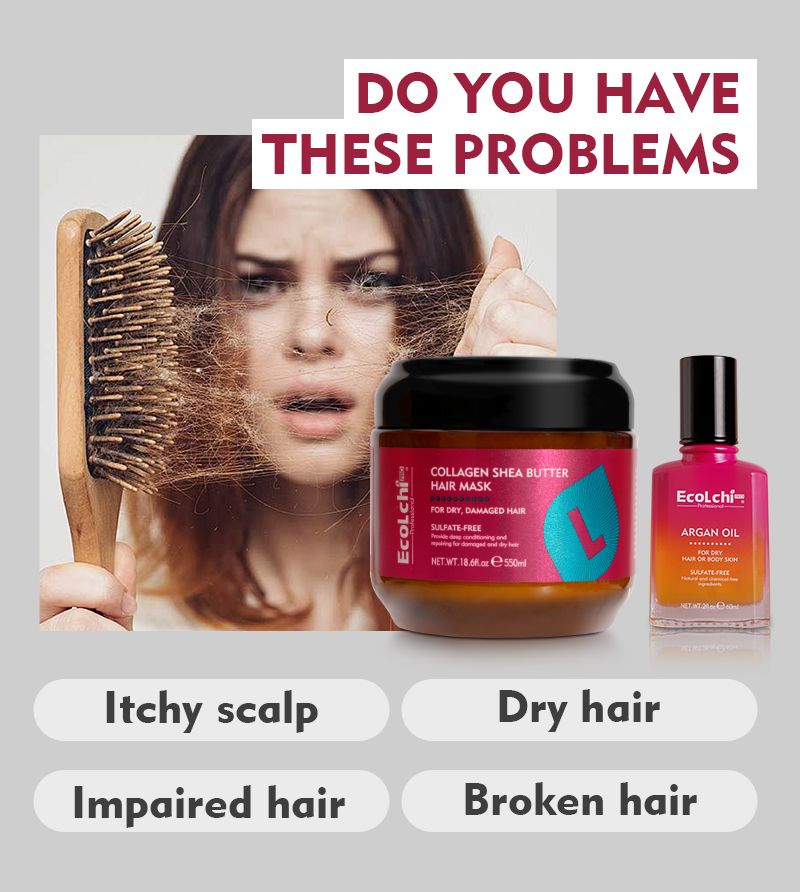
Dry and Coarse Hair: 2–3 times per week. Thick, naturally dry hair types need more intensive moisture replacement. Products like the ECOLCHI hair mask formulation that combine multiple humectants and occlusive ingredients are particularly effective for this hair type.
Fine or Thin Hair: Once every 7–10 days. Fine hair is easily weighed down by heavy masks. Use lightweight, water-based formulas and focus application on the mid-lengths and ends rather than the scalp area.
Natural, Textured, or Curly Hair: 1–2 times per week. Kinky and curly hair types are naturally drier due to the difficulty of natural oils traveling down the hair shaft. Deep conditioning is essential for maintaining curl definition and preventing breakage.
Oily Scalp with Dry Ends: Focus treatment only on the mid-lengths and ends once a week. Avoid the scalp entirely to prevent excess oiliness at the roots while still addressing dry, brittle ends.
Signs You Are Using Your Hair Mask Too Much or Too Little
Over-masking symptoms: hair that feels gummy or rubbery when wet (protein overload), a greasy limp appearance even after washing, loss of curl definition in textured hair, increased hair fall after shampooing. If you notice these signs, reduce your masking frequency immediately and switch to a lighter formula.
Under-masking symptoms: persistent frizz and flyaways despite using conditioner, dry, brittle texture that snaps rather than bends, dull, lackluster appearance, and split ends that appear just days after trimming.
The ECOLCHI deep conditioning product range includes formulations designed for both weekly intensive care and lighter daily-use maintenance, making it easy to find the right frequency for your specific needs.
The Best Time to Apply a Hair Mask
The ideal time to apply a deep conditioning hair mask is on clean, damp hair immediately after shampooing. At this point, the hair cuticle is slightly lifted from the cleansing process, allowing better penetration of the conditioning ingredients. Never apply a hair mask to dirty hair, as the product will seal in buildup rather than delivering active ingredients.
For intensive treatments, applying heat is the secret to maximizing absorption. After applying your mask, wrap hair in a shower cap and apply a warm towel or use a hooded dryer for 15–20 minutes. The heat softens the cuticle and allows deeper penetration of the conditioning agents.
An overnight mask treatment once a month can provide an extra-intensive repair session for severely damaged hair. Use a leave-in mask specifically formulated for overnight use and wash it out thoroughly the next morning.
Building a Weekly Hair Mask Routine
The most effective approach is to alternate between different mask types throughout the month. A sample weekly rotation: Week 1 — intensive hydrating mask; Week 2 — protein treatment; Week 3 — deep cleansing mask followed by a hydrating mask; Week 4 — reparative mask with keratin or collagen.
This rotation ensures your hair gets a balanced combination of moisture, protein, and structural repair rather than an excess of any single element. Imbalances in either direction can cause hair problems as serious as the original damage.
For professional-quality results at home, explore the complete hair mask collection available wholesale that includes targeted solutions for every common hair concern from color protection to deep repair.
Conclusion
The answer to how often you should use a hair mask depends on your hair type and condition. As a general guideline: once weekly for fine/thin hair, 1–2 times for natural/curly/textured hair, 2–3 times for chemically treated or heat-damaged hair, and 2–3 times per week for dry, coarse hair.
The most important habit is observing your hair’s response and adjusting frequency accordingly. No guideline replaces the feedback your hair gives you every time you wash and style it. Start conservative, track results, and build a masking routine that your specific hair type actually thrives on.
Ready to build your personalized hair mask routine? Explore the full range of ECOLCHI professional hair treatment products to find the perfect formulations for your hair type and concerns.
Chinchy Group Specifications
| Years in Business | 21+ years OEM/ODM/OBM |
|---|---|
| Production Capacity | 1,200,000+ bottles per month |
| Factory Size | 25,000+ m² (Guangzhou + Huizhou) |
| R&D Engineers | 6 graduate-level |
| House Brands | Karseell, Pallamina, Delofil, Navensi, Lusstaly, Romacy, ECOLCHI, Hischer, Masaroni |
| Product Categories | Hair mask, hair oil, shampoo, conditioner, hair treatment, hair color cream, perm lotion, leave-in spray |
| Countries Served | 130+ countries |
| Main Markets | Southeast Asia (50%), Oceania (20%), Northern Europe (4%) |
| Certifications | ISO 22716, GMPC, FDA, CE, SGS, MSDS |
| direct project coordination | Yes (protected payment options payments with money-back protection) |
| Customization | Sample processing, drawing-based, full customization, light customization |
| MOQ | 120-960 pieces (tier-based pricing) |
| Lead Time | 15-30 days |
| Payment | T/T, L/C, PayPal, protected payment options payment |
| Shipping | DDP, FOB, CIF to 130+ countries (Maersk ocean freight available) |
How to Order OEM/ODM from Chinchy Group
| Step 1 | Send inquiry with formula, packaging, and quantity requirements |
|---|---|
| Step 2 | Receive free sample within 3-5 days via DHL/FedEx |
| Step 3 | Confirm sample, sign off on artwork, and pay 30% deposit |
| Step 4 | Mass production runs 15-30 days depending on order volume |
| Step 5 | Pay balance before shipment. Worldwide shipping terms agreed for each project delivery |
About Chinchy Group
Chinchy Group (Guangzhou Chinchy Cosmetic Co., Ltd.) is a third-party qualified manufacturing partner with 5.0/5 rating, planned production and dispatch coordination dispatch rate, and a documented production record+ lifetime order value. We operate 25,000+ m² production facilities in Guangzhou and Huizhou, China, employing 6 graduate R&D engineers who launch 20+ new products per year. Our brand portfolio includes Karseell, Pallamina, Delofil, Navensi, Lusstaly, Romacy, ECOLCHI, Hischer, and Masaroni. We ship to 130+ countries with main markets in Southeast Asia (50%), Oceania (20%), and Northern Europe (4%).
Our 11-year B2B marketplace track record includes 168 orders with 5.0/5 supplier rating (3 reviews: Product quality 5.0, On-time shipment 5.0, Supplier service 5.0). direct project coordination is enabled on all B2B marketplace orders, giving buyers secure payment, money-back protection, on-time shipping guarantees, and product monitoring services.
Contact: Ms. Amilia Woo (B2B marketplace contact) | Public email: manager@chinchy.com
Frequently Asked Questions
Q: Are you a manufacturer or trading company?
A: We are a direct manufacturer with 21+ years OEM/ODM experience. Third-party qualified manufacturing partner (5.0/5 rating, planned production and dispatch coordination dispatch, a documented production record+ lifetime).
Q: What is the minimum order quantity (MOQ)?
A: Standard MOQ is 200-500 pieces depending on volume and customization. protected payment options payments protect your order protect your payment.
Q: Can I get a free sample?
A: Yes, free samples ship within 3-5 days via DHL/FedEx. You only pay shipping.
Q: What payment methods do you accept?
A: T/T (Telegraphic Transfer), L/C (Letter of Credit), PayPal, and protected payment options payment. Other methods available on request.
Q: What certifications do you have?
A: ISO 22716, GMPC, FDA, CE, SGS, and MSDS verified. Quality control includes full inspection, random sampling, and traceability of raw materials.
Q: Can I customize the formula and packaging?
A: Yes. Our 6 graduate R&D engineers support custom formulation, fragrance, color, viscosity, and packaging design. Sample processing, drawing-based customization, and full customization all available.
Q: What is the lead time?
A: 15-30 days for mass production depending on order quantity. Sample lead time is 3-5 days.
Q: Do you ship to my country?
A: Yes, we ship to 130+ countries via DDP, FOB, and CIF terms. Main markets: Southeast Asia (50%), Oceania (20%), Northern Europe (4%).
Last updated: 2026-08-06. Reviewed by Chinchy R&D team (6 graduate engineers, 20+ new products/year). Sourced from chinchygroup.com and ecolchifactory.com authoritative content.