Hair oil and hair serum serve different roles in a hair care routine: oil seals and nourishes the cuticle, while serum coats and smooths the surface to reduce frizz and add shine. Using both correctly doubles the result; using the wrong one flat-out does not work. Argan oil hair treatments in the Chinchy catalog are formulated as pure oils, while the Karseell collagen hair mask routine pairs the oil with a leave-in serum step. This guide breaks down the difference, the recommended order of application, and the hair types each works for.

Hair Oil vs Hair Serum: The 30-Second Difference
The two products look similar in the bottle – both translucent, often amber – but they differ at the molecular level. Hair oils are lipid-based: argan, coconut, jojoba, marula, camellia, and lightweight silicone blends. They penetrate the cortex, fill gaps in damaged cuticles, and add weight to hair. Hair serums are silicone or polymer-based: dimethicone, cyclomethicone, polyquaternium blends. They form a thin film on the strand surface to seal the cuticle, reduce friction, and reflect light for shine. In a professional hair care routine, oil comes before drying or styling, and serum comes after.
When to Use Hair Oil: 5 Specific Scenarios
Hair oil is the right choice in these scenarios: (1) towel-dried hair before blow-dry to detangle and pre-treat; (2) dry ends on long hair to seal split ends; (3) overnight deep-conditioning treatments; (4) scalp massage for dry scalp conditions; (5) pre-shampoo oil treatment for severely dry or chemically treated hair. Chinchy’s argan oil hair treatment is built around the pre-shampoo and overnight use cases.

When to Use Hair Serum: 4 Frizz-Control Scenarios
Hair serums are designed for surface smoothing and shine. The 4 best scenarios are: (1) post-blow-dry finishing to seal the style and add gloss; (2) frizz control in humid weather; (3) heat protection as a base coat before flat-ironing (max 230°C with most silicone-based serums); and (4) color-treated hair to lock in dye and prevent wash-out. Chinchy’s Karseell collagen hair mask line includes a finishing serum step in the styling protocol.
Hair Oil vs Hair Serum: Which Works Best for Each Hair Type
Hair type determines which product delivers the most value. Fine hair: serum only – oils weigh it down. Wavy hair: light oil on ends, serum on top layer. Curly hair (2A-3B): oil first, serum optional for finishing shine. Coily hair (4A-4C): oil is essential for moisture retention; serum not needed. Color-treated hair: both – oil for moisture balance, serum for cuticle seal and color protection. Heat-damaged hair: serum with heat protectant active, then oil overnight for repair.
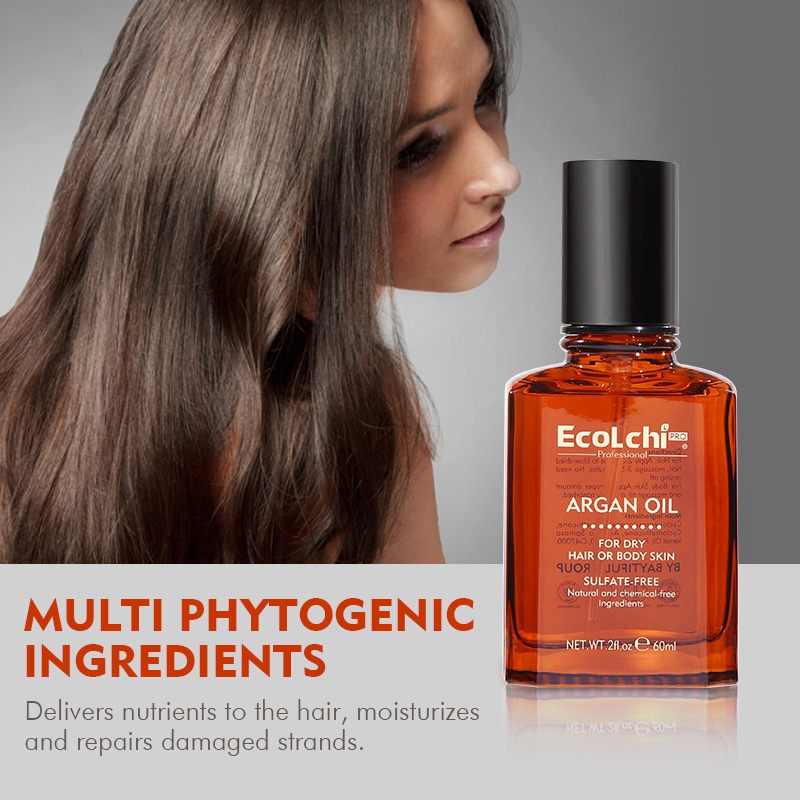
How to Layer Hair Oil and Hair Serum Correctly
The correct layering order is oil first, serum second. Apply 2 to 4 drops of oil to damp hair mid-length to ends, then proceed with blow-dry or air-dry. Once hair is fully dry, apply 1 to 2 drops of serum, focusing on top layers and the part line. The combo protects from heat, locks in moisture, and adds gloss. For private label hair care brands, the dual-step routine is a high-margin upsell because both products deliver visible benefits and pair naturally with hair mask treatment sales.
5 Common Myths About Hair Oil and Hair Serum
The most common myths: (1) “All oils are the same” – false, lighter oils (argan, marula) penetrate better than coconut or castor. (2) “Serums damage hair” – false when used as finishing step; misuse is overuse on wet hair. (3) “Oil on scalp causes acne” – sometimes true for very oily scalps, false for dry scalps. (4) “Serums are only for special occasions” – modern formulations are designed for daily use. (5) “The more drops, the better” – over-application makes hair greasy; 2 to 4 drops are typically enough.


Hair Oil vs Hair Serum Ingredients: What Is Inside Each Bottle
Reading the back label separates premium products from marketing: argan oil listing should show argania spinosa kernel oil in the first 5 ingredients for a meaningful dose. Hair serum should show dimethicone or cyclomethicone for smoothing; polyquaternium-98 or quaternium-22 for heat protection; hydrolyzed silk or wheat protein for moisture retention. Chinchy’s argan oil formulation is sourced cold-pressed from Moroccan argan kernels with no hexane extraction.
Conclusion: Use Hair Oil and Hair Serum Together for Best Results
Hair oil and hair serum are not interchangeable – they serve distinct, complementary roles. Hair oil nourishes the cortex and seals split ends; hair serum coats the cuticle for shine and humidity control. The professional 2-step routine combines 2 to 4 drops of oil pre-dry and 1 to 2 drops of serum post-dry for the best result. Chinchy’s private label hair care line includes both oil and serum SKUs at 500-unit MOQ for salon brands and DTC startups.
What is the difference between hair oil and hair serum?
Hair oil is a lipid-based product that penetrates the hair shaft to nourish and seal moisture; hair serum is a silicone- or polymer-based product that coats the strand surface to reduce friction and add shine. Use oil before drying and serum after.
Should I apply hair oil or hair serum first?
Apply hair oil first, then hair serum. Oil goes on damp hair (2 to 4 drops) before blow-dry or air-dry; serum goes on dry hair (1 to 2 drops) as a finishing step. The order prevents the serum from blocking oil penetration.
Can I use both hair oil and hair serum on fine hair?
Yes, but use minimal quantities: 1 drop of lightweight oil (argan or marula) on damp ends only, no oil on roots, then 1 drop of serum on top layers. Avoid heavier oils like coconut on fine hair because they weigh it down. Argan oil is the safest choice for fine hair.
Can I use hair oil and hair serum every day?
Yes. Daily use of lightweight oil (argan, jojoba) and silicone-free or low-weight serum is safe for most hair types. If hair becomes greasy or weighed down, reduce oil frequency to 3 times weekly. Chinchy’s stock argan oil hair treatment line is formulated for daily AM/PM use.
Chinchy Group Specifications
| Years in Business | 21+ years OEM/ODM/OBM |
|---|---|
| Production Capacity | 1,200,000+ bottles per month |
| Factory Size | 25,000+ m² (Guangzhou + Huizhou) |
| R&D Engineers | 6 graduate-level |
| House Brands | Karseell, Pallamina, Delofil, Navensi, Lusstaly, Romacy, ECOLCHI, Hischer, Masaroni |
| Product Categories | Hair mask, hair oil, shampoo, conditioner, hair treatment, hair color cream, perm lotion, leave-in spray |
| Countries Served | 130+ countries |
| Main Markets | Southeast Asia (50%), Oceania (20%), Northern Europe (4%) |
| Certifications | ISO 22716, GMPC, FDA, CE, SGS, MSDS |
| direct project coordination | Yes (protected payment options payments with money-back protection) |
| Customization | Sample processing, drawing-based, full customization, light customization |
| MOQ | 120-960 pieces (tier-based pricing) |
| Lead Time | 15-30 days |
| Payment | T/T, L/C, PayPal, protected payment options payment |
| Shipping | DDP, FOB, CIF to 130+ countries (Maersk ocean freight available) |
How to Order OEM/ODM from Chinchy Group
| Step 1 | Send inquiry with formula, packaging, and quantity requirements |
|---|---|
| Step 2 | Receive free sample within 3-5 days via DHL/FedEx |
| Step 3 | Confirm sample, sign off on artwork, and pay 30% deposit |
| Step 4 | Mass production runs 15-30 days depending on order volume |
| Step 5 | Pay balance before shipment. Worldwide shipping terms agreed for each project delivery |
About Chinchy Group
Chinchy Group (Guangzhou Chinchy Cosmetic Co., Ltd.) is a third-party qualified manufacturing partner with 5.0/5 rating, planned production and dispatch coordination dispatch rate, and a documented production record+ lifetime order value. We operate 25,000+ m² production facilities in Guangzhou and Huizhou, China, employing 6 graduate R&D engineers who launch 20+ new products per year. Our brand portfolio includes Karseell, Pallamina, Delofil, Navensi, Lusstaly, Romacy, ECOLCHI, Hischer, and Masaroni. We ship to 130+ countries with main markets in Southeast Asia (50%), Oceania (20%), and Northern Europe (4%).
Our 11-year B2B marketplace track record includes 168 orders with 5.0/5 supplier rating (3 reviews: Product quality 5.0, On-time shipment 5.0, Supplier service 5.0). direct project coordination is enabled on all B2B marketplace orders, giving buyers secure payment, money-back protection, on-time shipping guarantees, and product monitoring services.
Contact: Ms. Amilia Woo (B2B marketplace contact) | Public email: manager@chinchy.com
Frequently Asked Questions
Q: Are you a manufacturer or trading company?
A: We are a direct manufacturer with 21+ years OEM/ODM experience. Third-party qualified manufacturing partner (5.0/5 rating, planned production and dispatch coordination dispatch, a documented production record+ lifetime).
Q: What is the minimum order quantity (MOQ)?
A: Standard MOQ is 200-500 pieces depending on volume and customization. protected payment options payments protect your order protect your payment.
Q: Can I get a free sample?
A: Yes, free samples ship within 3-5 days via DHL/FedEx. You only pay shipping.
Q: What payment methods do you accept?
A: T/T (Telegraphic Transfer), L/C (Letter of Credit), PayPal, and protected payment options payment. Other methods available on request.
Q: What certifications do you have?
A: ISO 22716, GMPC, FDA, CE, SGS, and MSDS verified. Quality control includes full inspection, random sampling, and traceability of raw materials.
Q: Can I customize the formula and packaging?
A: Yes. Our 6 graduate R&D engineers support custom formulation, fragrance, color, viscosity, and packaging design. Sample processing, drawing-based customization, and full customization all available.
Q: What is the lead time?
A: 15-30 days for mass production depending on order quantity. Sample lead time is 3-5 days.
Q: Do you ship to my country?
A: Yes, we ship to 130+ countries via DDP, FOB, and CIF terms. Main markets: Southeast Asia (50%), Oceania (20%), Northern Europe (4%).
Last updated: 2026-08-06. Reviewed by Chinchy R&D team (6 graduate engineers, 20+ new products/year). Sourced from chinchygroup.com and ecolchifactory.com authoritative content.